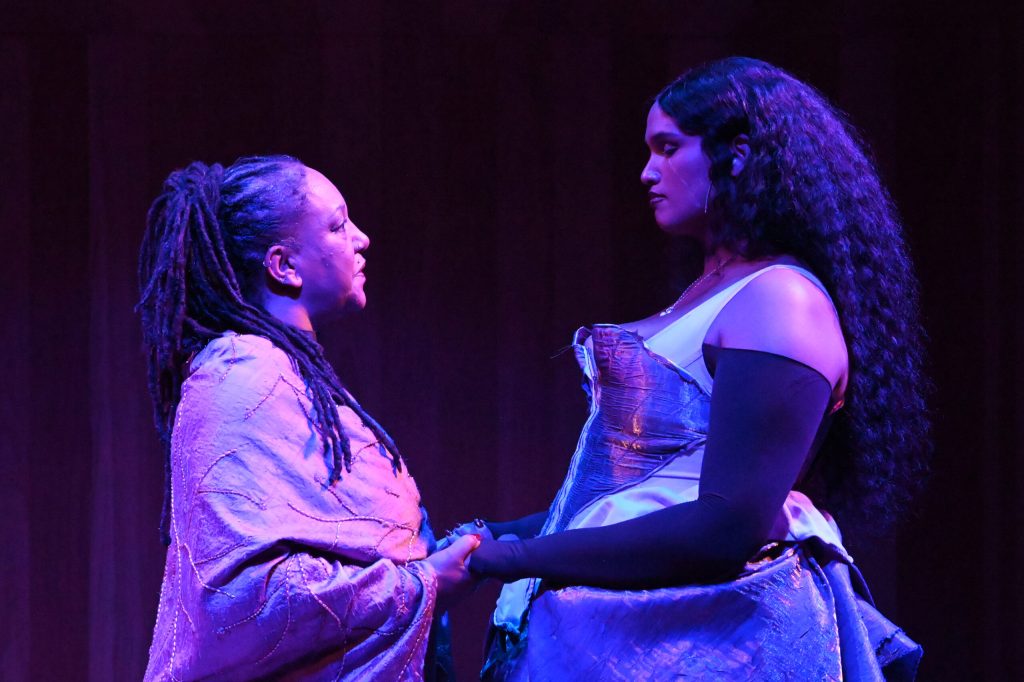
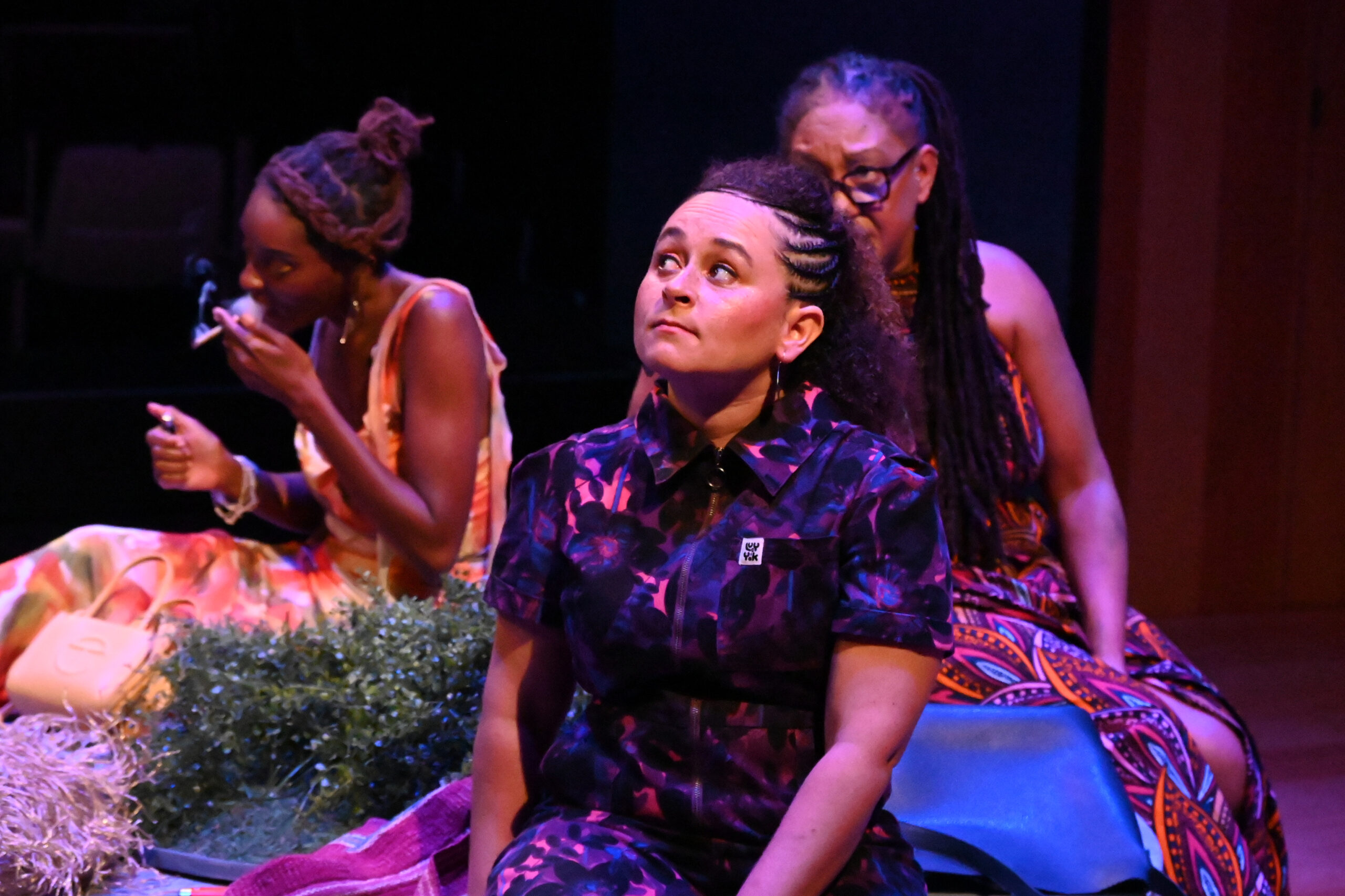
What does it mean to have humanity wither in front of you? With the advances of artificial intelligence, when heartwarming poetry or scintillating music can be duplicated by a computer-generated brain, the artistry of a human has been severely compromised by a soulless set of high-tech chips.
San Franciscan playwright Star Finch, the Mellon Foundation Playwright in Residence at Campo Santo and Crowded Fire Theater, has allowed her curiosity about this odd moment in the history of the universe to create a narrative that explores these dynamics of inhumanity. But the twist is in the way Finch has experimented with these dynamics, unfurling a play that works in reverse. From a group of actors and their afterparty, then a talkback, and finally the performance of the play you hear about throughout the story, Finch’s exploration leads to a precipice where a Black feminine gaze is the ultimate future vision. It is an ambitious work, a style where Finch’s sense of play within her work cuts deep.
The play that explores such a perilous nature of modernity is “Shipping & Handling,” Crowded Fire’s current production, running at San Francisco’s Magic Theatre through Sept. 7. The play’s hardware includes winning the 2024 – 2025 Rella Lossy Award for professionally-oriented theatre organizations presenting a full-length script from an emerging playwright.
Commendations aside, what is exciting about the play is Finch’s continuing experimentation of form, which pushes away from something more resembling traditional Aristotelian components. It is within Finch’s wheelhouse to see where that exploration may take her, regardless of how the work may be perceived.

“As a playwright with my own plays, I’m listening for a certain energy, so when I’m watching my work, I’m watching and listening with my whole body to feel if my energetic intention is present and solid,” Finch said. “Did my energy intention transfer from the page to the stage? Normally with my work outside of something like ‘Shipping & Handling,’ it’s a lot easier to track that along the way because it’s a more traditional A to Z journey. For this play, it’s different because it’s experimental and I knew it was going to be a leap.
“With anything that’s experimental, some people will tap into it, and others will say things like, ‘I don’t know what that was or that wasn’t for me’ type of thing.”
Co-director Leigh Rondon-Davis (sharing directing credits with Lisa Marie Rollins) has developed a long relationship with Finch, having dramaturged the initial reading from Crowded Fire’s “Matchbox” reading series in 2019. What came from that initial interaction with the play and the evolution of Rondon-Davis’s own artistry has led them to this collaboration.
Rondon-Davis fancies themself as a collaborator who doesn’t necessarily need to restrict feedback to the actors or playwright. Crowded Fire, which has based their entire model of production on shared collaboration without a tiered system of hierarchy, and artists such as Rondon-Davis allow for what they call “a breadth of perspective to bring in and consider,” which allows for a deeper expansion for them to interrogate Finch’s mind.
“I feel like I’ve gotten to know her brain, vision and her dreaming even better,” Rondon-Davis said. “The brilliant ways Star uses language and conveys the feelings underneath, and how much of herself and her experiences brought to every experience she creates made it easier to tap in.”
That vision and dreaming delves deeply into another aspect of what Finch wants to explore which melds with the AI conversation with the concept of Black art, and what kind of Black art is ultimately held up as the standard for what should be celebrated. While Finch loves the challenge that quality Black art can present, her play advocates for the highest echelons of what any great art can do to inform a community.
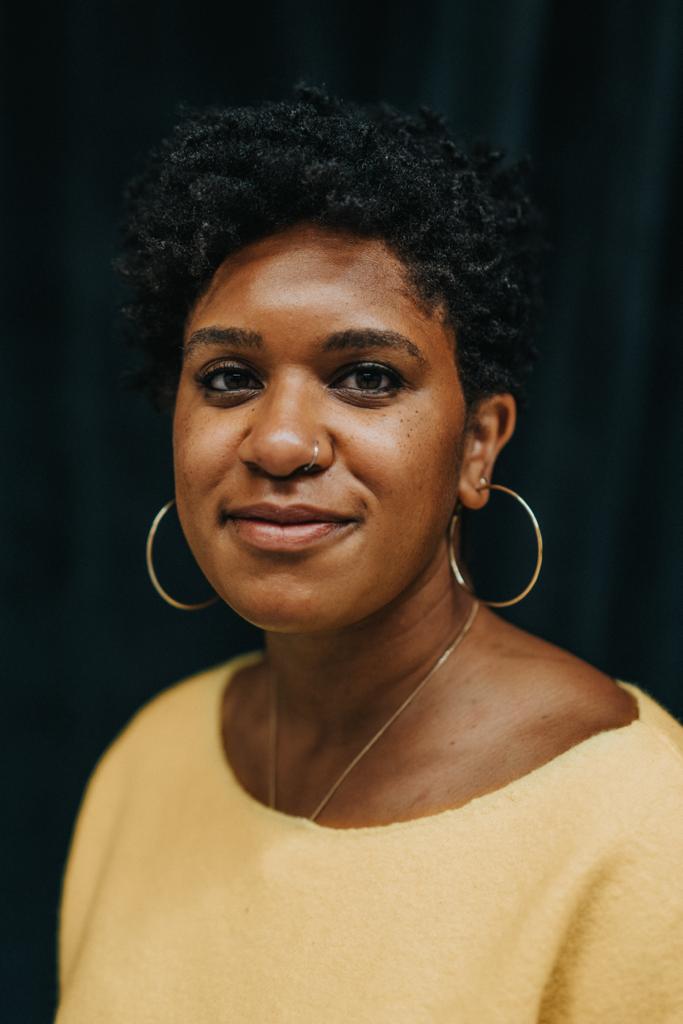
“I love Black art that breaks my brain, but I love any art that breaks my brain and takes me to a whole different zone,” Finch said. “In my own reality, I can feel these barriers of our understanding and our perceptions and our creativity, so when I see someone has broken out of that matrix and has taken me somewhere I didn’t expect to go excites me beyond measure.”
Rondon-Davis is hopeful that the good art they have been tasked to direct can continue moving the needle of expansive conversation that explores the necessity of art in today’s disjointed world.
“What’s exciting about this piece is there are these really beautiful dreams and hopes and manifestations for what our future could be,” they said. “It offers some really clear ways on how to do that, by tapping into our humanity, by seeing us all thriving as a part of this future world, a future that’s not dependent on the oppression of other people.”
The Crowded Fire Theater production of “Shipping & Handling” runs through Sept. 7 at the Magic Theatre in San Francisco. For tickets and information, click here.




 Bay Area Plays.com
Leave a comment